
Happy New Year! I hope you all had an enjoyable holiday and are starting off 2025 with love and optimism for a great year. Before I share our latest update, I wanted to offer a passage written by Emily Perl Kingsley.
Welcome to Holland
Emily Perl KingsleyI am often asked to describe the experience of raising a child with a disability – to try to help people who have not shared that unique experience to understand it, to imagine how it would feel. It’s like this……
When you’re going to have a baby, it’s like planning a fabulous vacation trip – to Italy. You buy a bunch of guide books and make your wonderful plans. The Coliseum. The Michelangelo David. The gondolas in Venice. You may learn some handy phrases in Italian. It’s all very exciting.
After months of eager anticipation, the day finally arrives. You pack your bags and off you go. Several hours later, the plane lands. The flight attendant comes in and says, “Welcome to Holland.”
“Holland?!?” you say. “What do you mean Holland?? I signed up for Italy! I’m supposed to be in Italy. All my life I’ve dreamed of going to Italy.”
But there’s been a change in the flight plan. They’ve landed in Holland and there you must stay.
The important thing is that they haven’t taken you to a horrible, disgusting, filthy place, full of pestilence, famine and disease. It’s just a different place.
So you must go out and buy new guide books. And you must learn a whole new language. And you will meet a whole new group of people you would never have met.
It’s just a different place. It’s slower-paced than Italy, less flashy than Italy. But after you’ve been there for a while and you catch your breath, you look around…. and you begin to notice that Holland has windmills….and Holland has tulips. Holland even has Rembrandts.
But everyone you know is busy coming and going from Italy… and they’re all bragging about what a wonderful time they had there. And for the rest of your life, you will say “Yes, that’s where I was supposed to go. That’s what I had planned.”
And the pain of that will never, ever, ever, ever go away… because the loss of that dream is a very very significant loss.
But… if you spend your life mourning the fact that you didn’t get to Italy, you may never be free to enjoy the very special, the very lovely things … about Holland.
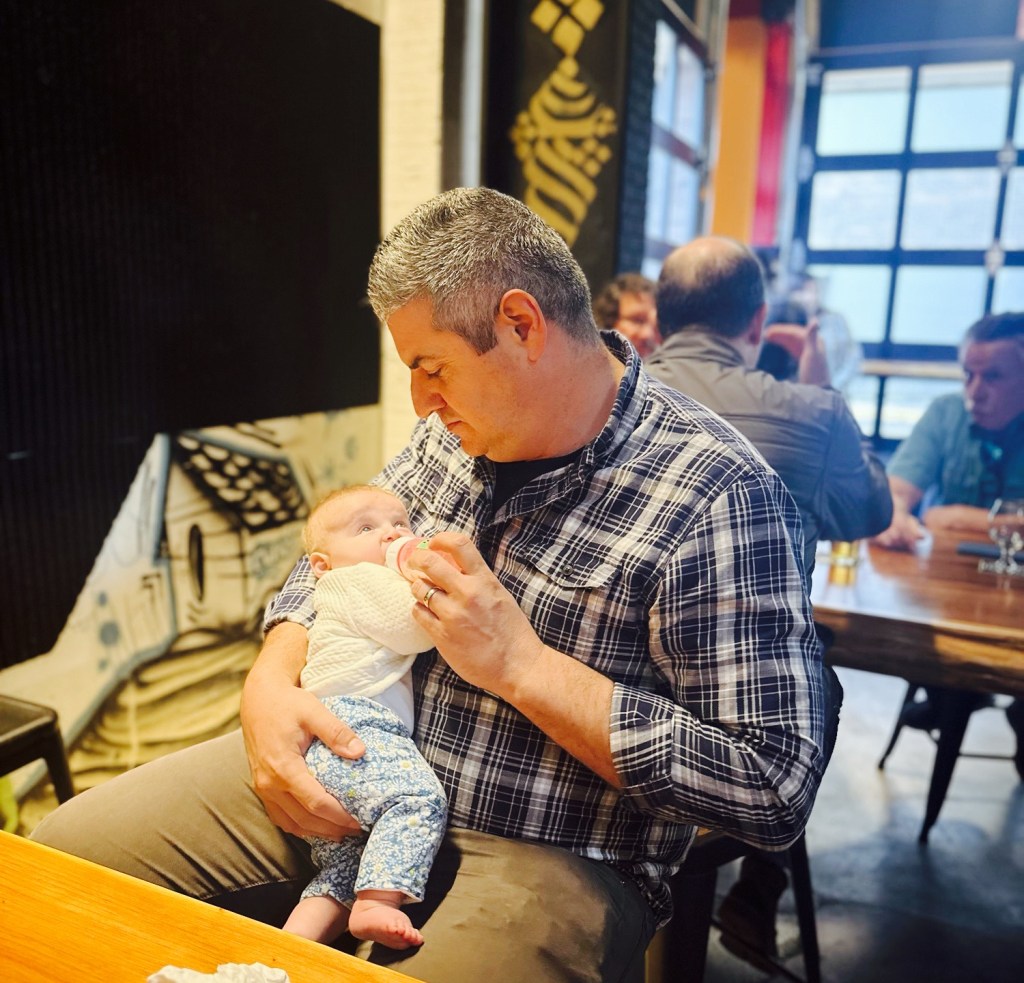
This passage resonates with us. It gives us hope for the new life that we are embarking on with our baby girl. I hope it brings you comfort in knowing that although this is not what we expected for parenthood, we remain positive for what lies ahead.
From the results of the MRI test back in December we learned that there were some significant abnormalities in Brinley’s brain that were a cause for concern. We were referred to the Kaiser Neurologist and met with the doctor this past Monday. The news shared on Monday confirmed their concern that Brinley has Aicardi Syndrome. This is a very rare genetic disorder of which there are currently less than 1,000 cases in the United States, and approximately 4,000 cases worldwide. We will continue our pursuit of genetic testing, which at this point will benefit our team of doctors to explain if there is anything beyond Aicardi Syndrome that they should be aware. I will provide a link at the end of this post for more context on Aicardi, but in summary:
- Aicardi syndrome is a rare disorder that’s present at birth (congenital). It causes malformations in the brain, eyes and other parts of the body. It leads to lifelong difficulties, including intellectual disabilities and developmental delay.
- One of the most common features of Aicardi Syndrome is the occurrence of severe, frequent seizures, often starting in infancy. These seizures can be hard to control and may require ongoing treatment. While we have not observed evidence of a seizure at this point, we are prepared for what is ahead as they typically start around 4 months of age.
- Children with Aicardi Syndrome typically experience delays in reaching milestones like sitting, crawling, walking, and talking. These delays can vary from child to child, but most will require lifelong support for learning and development.
- There is no cure for Aicardi Syndrome, but treatment focuses on managing the symptoms. This includes medications to control seizures, physical and occupational therapy to help with development, and support for vision problems. Early intervention and specialized care can help improve quality of life.
- Hearing loss is not typically associated with Aicardi, so we hope to learn more from the genetic testing to understand how hearing loss might have come to be.
This is certainly sad and life alternating news. Lauren and I remain dedicated to supporting our baby girl and continue with the approach to take it one day at a time, and to give her every opportunity to live a happy life.
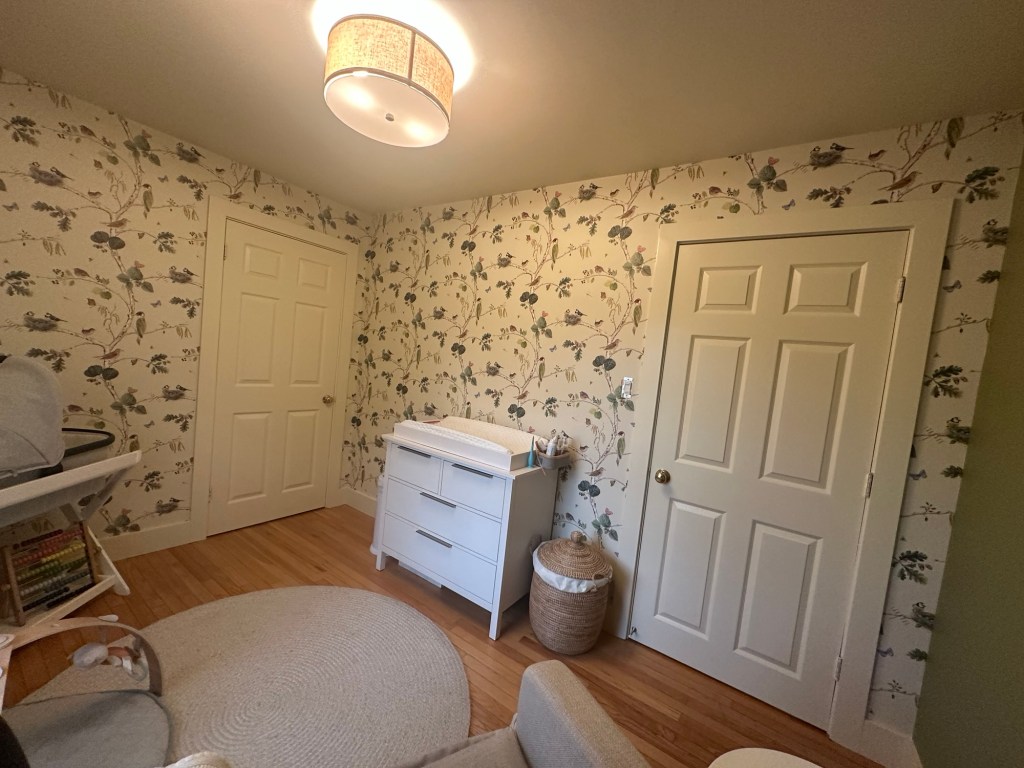
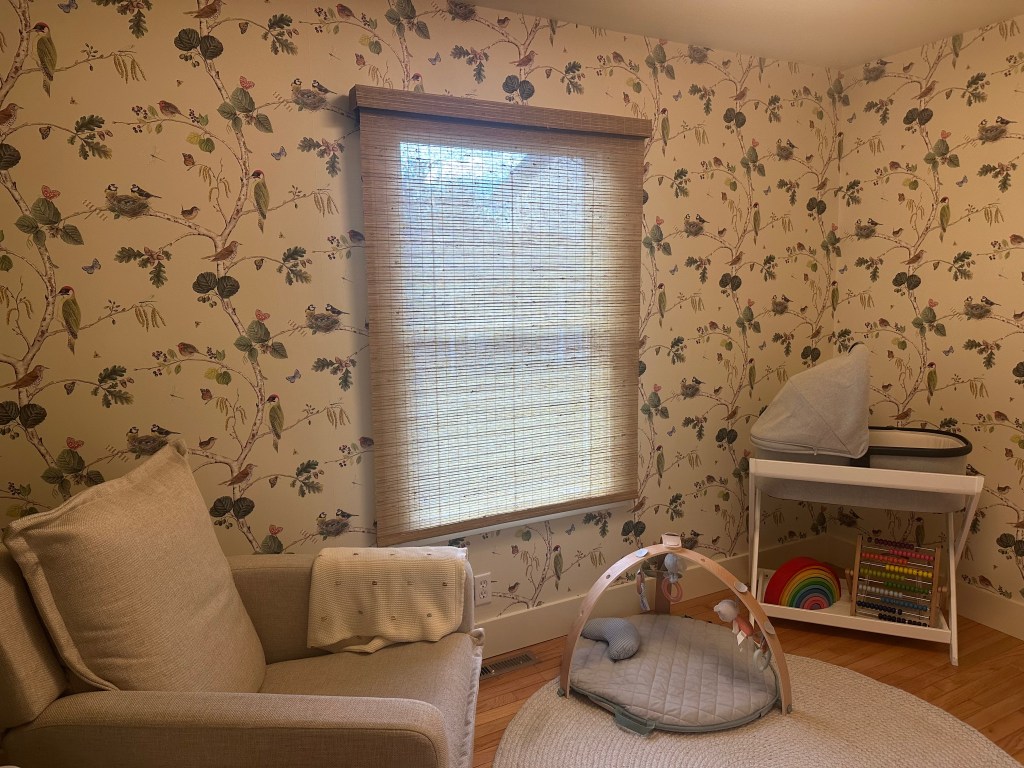
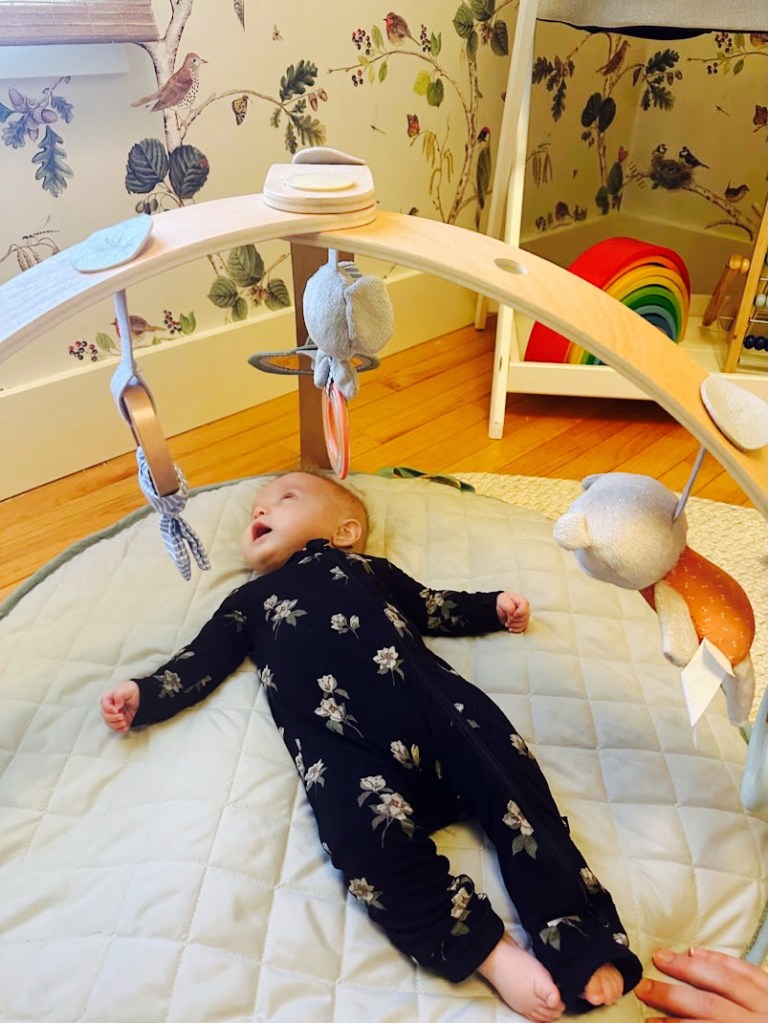
As mentioned in a previous post, we added wallpaper to her nursery room. It turned out great! Lauren has tasked me with identifying the genus and species of every bird and insect on the wall, and I am eager to dive in.
Lauren and I are now more than ever focused on our mental health. We cannot care for our girl if we don’t have our own mental strength and balance. We are taking daily walks through our town and are enjoying seeing friends and family on weekend trips and dinner parties.
One opportunity we have to meet other parents with children diagnosed with Aicardi Syndrome will come in July 2025 when we plan to attend an Aicardi Syndrome conference in Nashville, TN. We hope to gain perspective, hope, and learn tips for managing the challenges of Brinley’s condition.
Our next steps are to meet with the Kaiser infant ophthalmologist next week, and to receive the preliminary results of the genetic testing in the next few weeks. We anticipate there will be further genetic testing that may take several months to receive results.
Again, we cannot thank you all enough for your love and support. We are fueled by your love, and you give us strength to navigate this diagnosis.
With love,
Keith and Lauren
Links for more information on Aicardi Syndrome
https://my.clevelandclinic.org/health/diseases/6028-aicardi-syndrome
https://rarediseases.org/rare-diseases/aicardi-syndrome/#disease-overview-main


 The Baker Family Journey