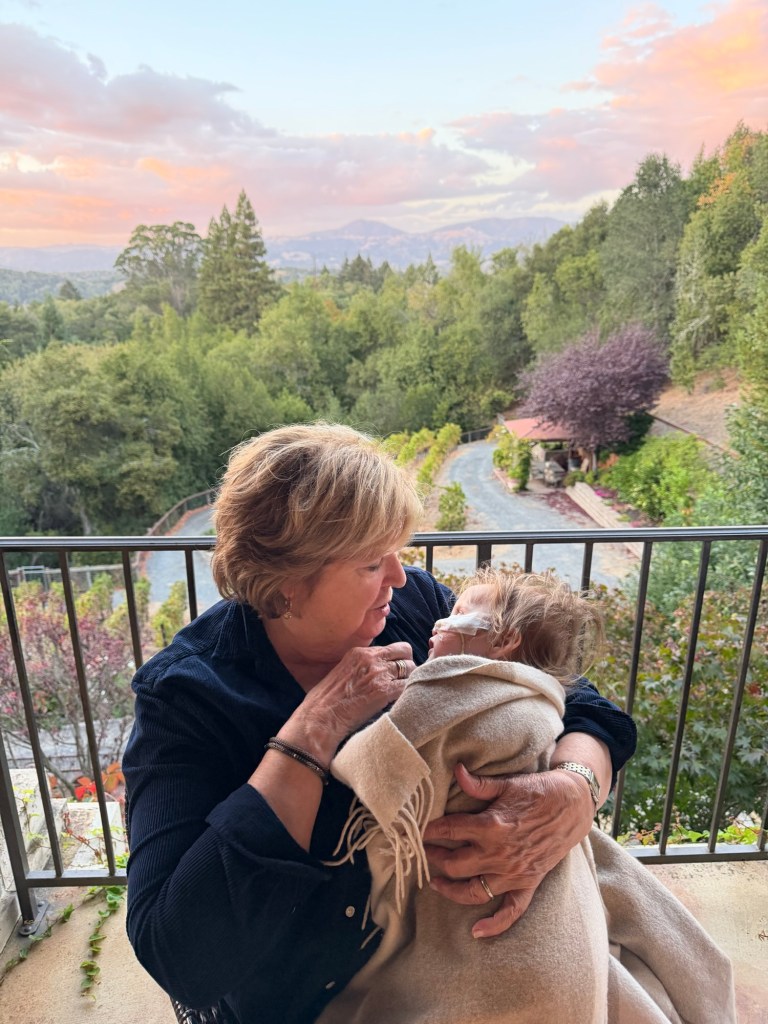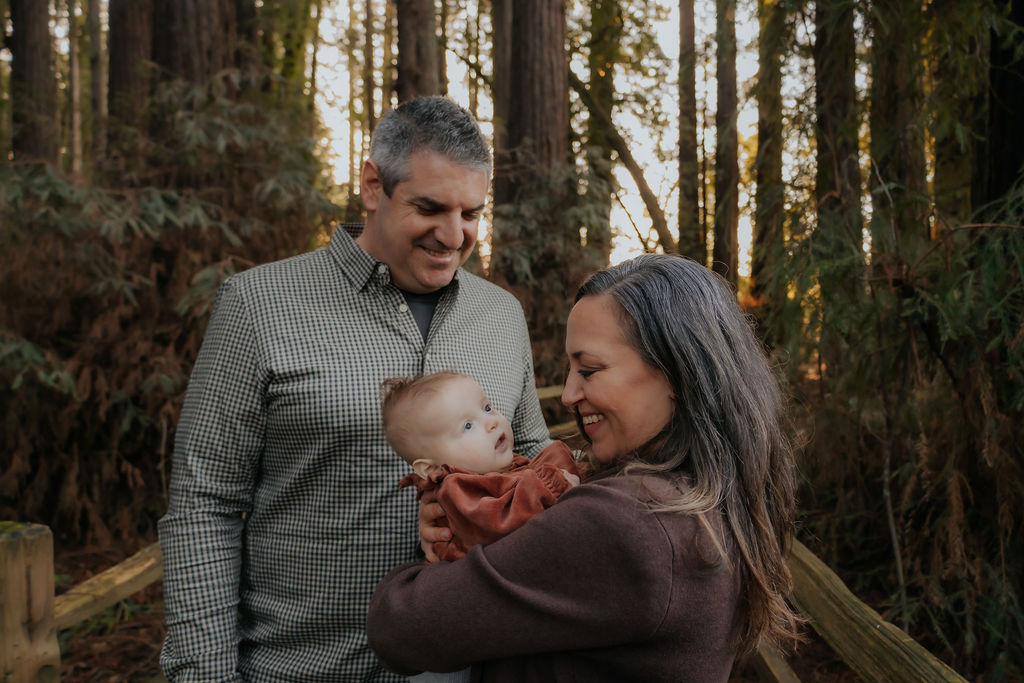
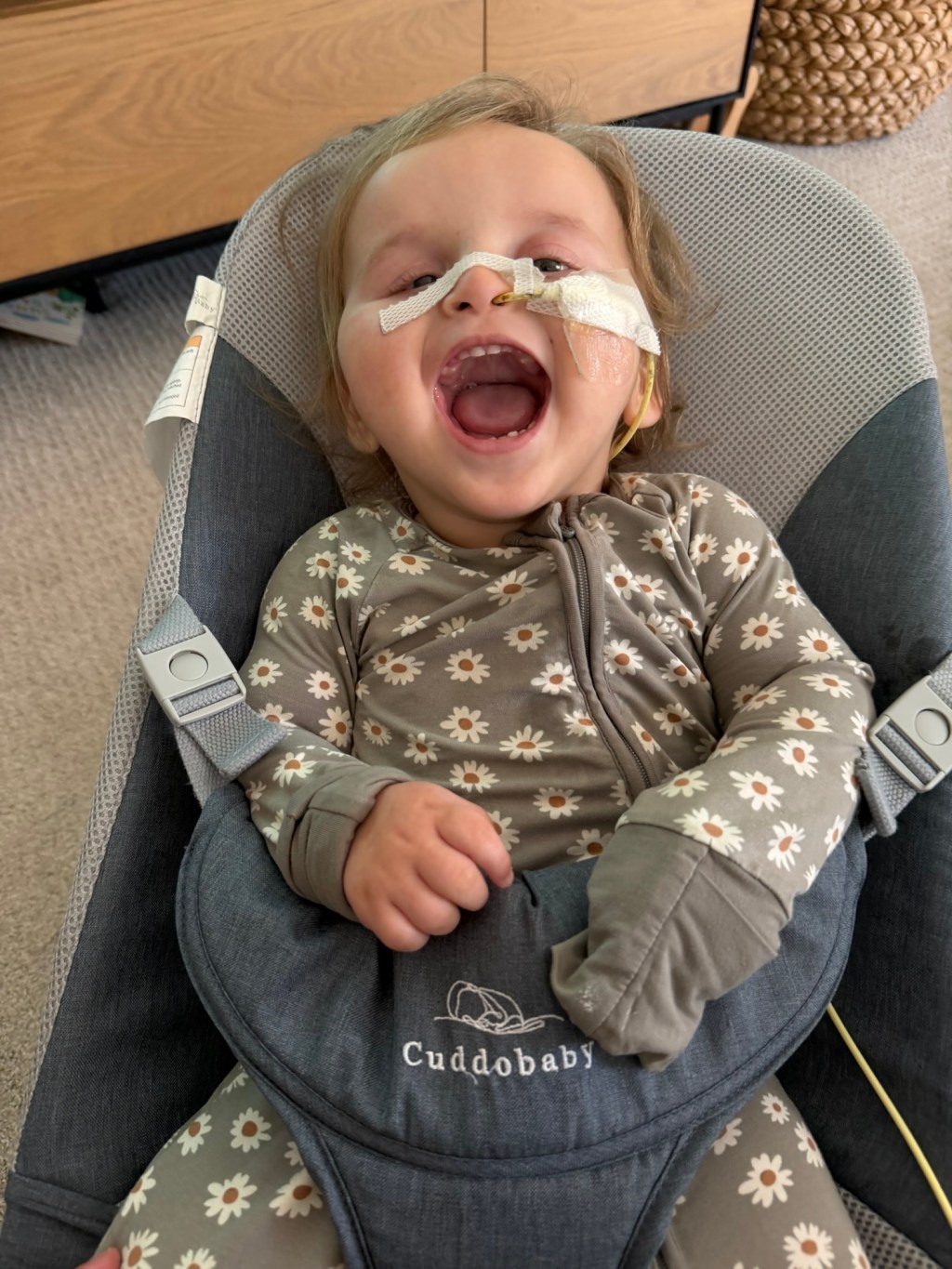
It’s been a busy few weeks for the Baker family! After spending another 15 days in the hospital, we’re happy to share that Brinley is finally home, doing better, and we’re beginning to settle into our new routines.
Just three nights after returning home from her previous hospitalization, we found ourselves back at the hospital on September 23. What started with extremely high fevers, significant discomfort, and unusual muscle movements turned into another extended stay, including a transfer to Kaiser Oakland for specialized neurological care.
While these past few weeks have certainly been challenging, we came away with some important answers, a better understanding of Brinley’s needs, and a treatment plan that we’re hopeful will help her continue to thrive.
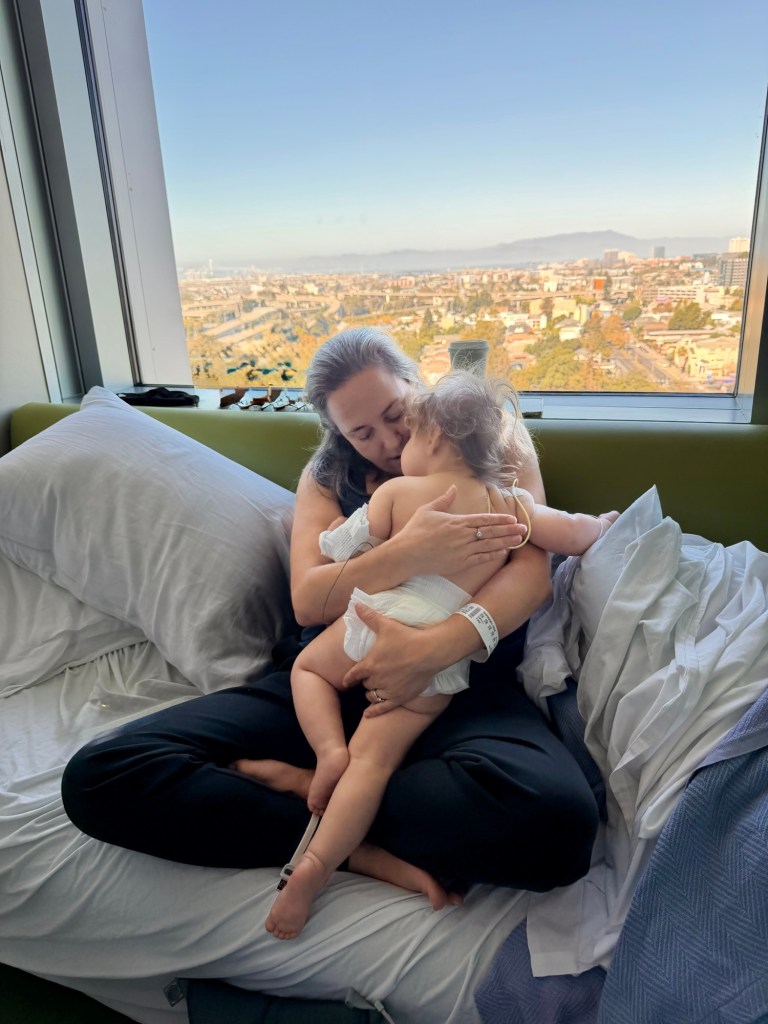
Understanding Brinley’s New Diagnosis
One of the most significant developments from this hospitalization was learning that Brinley has a neurological movement disorder called dystonia.
Dystonia causes involuntary muscle contractions that can result in stiffening, twisting movements, and unusual body postures. These movements were observed in the days at home, and so it was very important that Lauren and I brought her back in to the hospital. Brinley experienced a particularly severe episode called status dystonicus, also known as a dystonic storm, where these muscle contractions became prolonged and difficult to control.
Her doctors believe that the combination of illness, undergoing anesthesia, and physical stress likely contributed to the episode. Given Brinley’s underlying SOX2 diagnosis and neurological differences, she is more susceptible to these types of movement disorders.
Although this is another diagnosis for us to navigate, we’re grateful to have a better understanding of what has been happening. Looking back, some of the movements and episodes of discomfort we’ve seen over the past couple of years may have been related to dystonia.
The encouraging news is that dystonia can often be managed with medications and supportive care. Her neurology team has developed a treatment plan, and we’re already seeing improvements in her comfort and ability to relax.
Going forward, we’ll continue working closely with her specialists to monitor her symptoms, adjust medications when necessary, and better understand how dystonia may affect her development and daily activities.
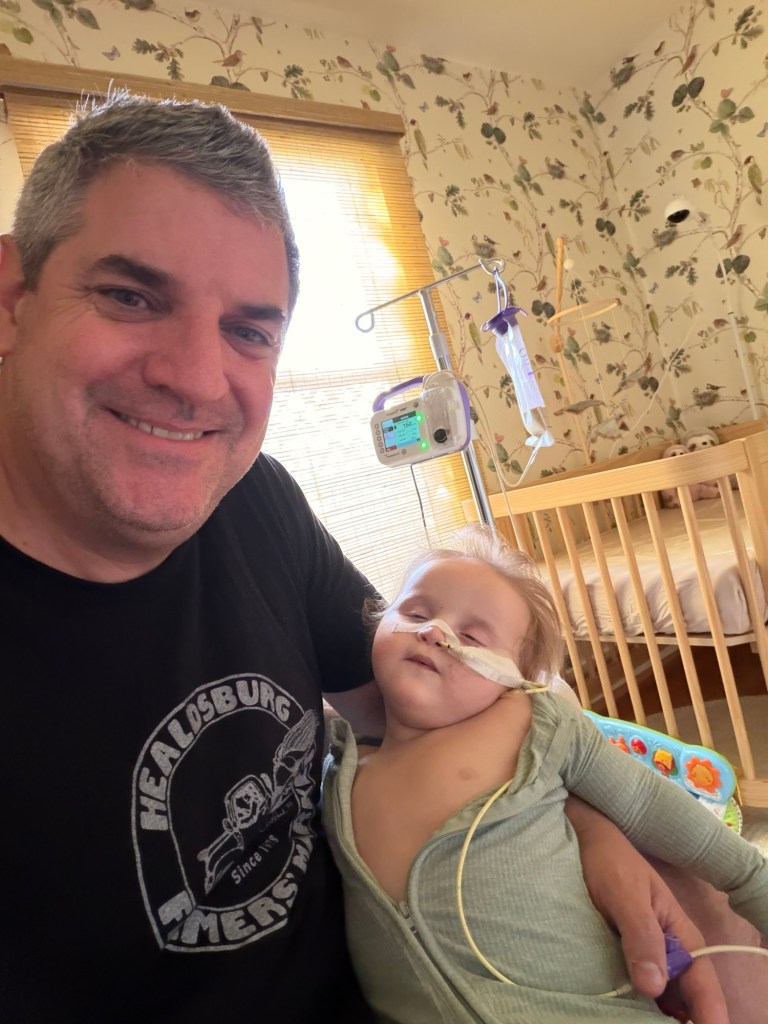
Adjusting to Our New Normal
Now that we’re home, our biggest focus is establishing a routine that works for Brinley and our family.
Her daily care has become considerably more involved. Between her feeding schedule, medications, growth hormone injections, and regular therapies, there is a lot to coordinate throughout the day and night.
We’re currently maintaining the medication regimen established during her hospitalization, which has been effective but is also pretty exhausting to manage. Some medications are given multiple times throughout the day, and keeping everything on schedule requires careful planning.
Feeding is another major part of our daily routine. Brinley continues to receive her nutrition through her NG tube, with six feedings spread throughout the day and night. Each feeding takes approximately an hour, and because of her reflux, she needs to remain upright during and after feeds.
The overnight schedule has been particularly challenging. Between preparing formula, administering medications, running her feeding pump, and holding her upright, we’re spending a significant amount of time awake each night.
We’re gradually getting more comfortable with the process, but it’s definitely an adjustment!
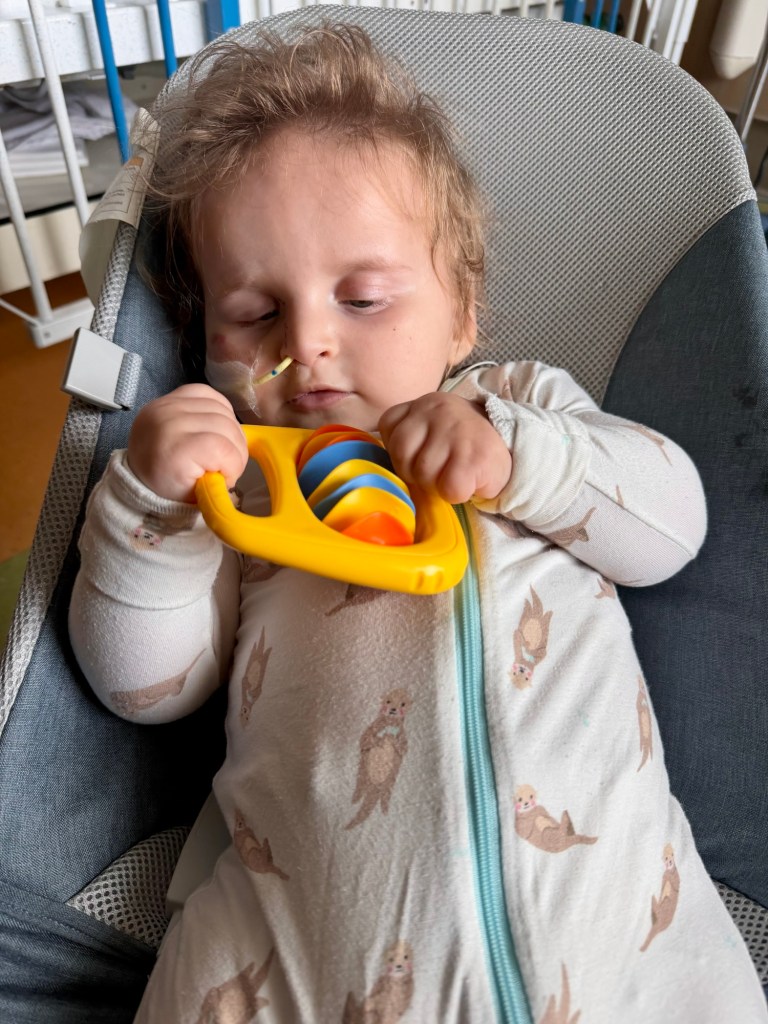
Exploring a G-Tube
One of the next big decisions we’re considering is transitioning Brinley from her current NG tube to a G-tube.
A G-tube is a feeding tube placed directly into the stomach through the abdomen, providing a more permanent and secure way to deliver nutrition, hydration, and medications.
While her NG tube has been incredibly helpful, it also comes with some challenges. Brinley has pulled it out several times, requiring replacement, and managing the tube around her face can be uncomfortable for her.
A G-tube could make feeding and medication administration easier, reduce the risk of accidental tube removal, and give us more flexibility with her daily activities.
We’re continuing conversations with her medical team about the procedure, recovery, and whether this is the best long-term option for her.
Building Our Support Team
With Lauren and me both preparing to return to work full time, we’re also making some adjustments to our caregiving support.
We’re fortunate to have our wonderful daytime nanny, Courtney, who continues to help care for Brinley during the week. We also have care from Maribel, who will be providing additional support during the evenings, nights, and weekends over the next few weeks.
Having this additional help is going to make a big difference as we transition back to our work schedules and continue learning how to manage Brinley’s new medical needs.
We’re spending time making sure both Courtney and Maribel are comfortable with her feeding pump, medications, and routines so that everyone is working together and Brinley has consistent care.
It’s a team effort, and we’re incredibly grateful to have people who care so much about our little girl.
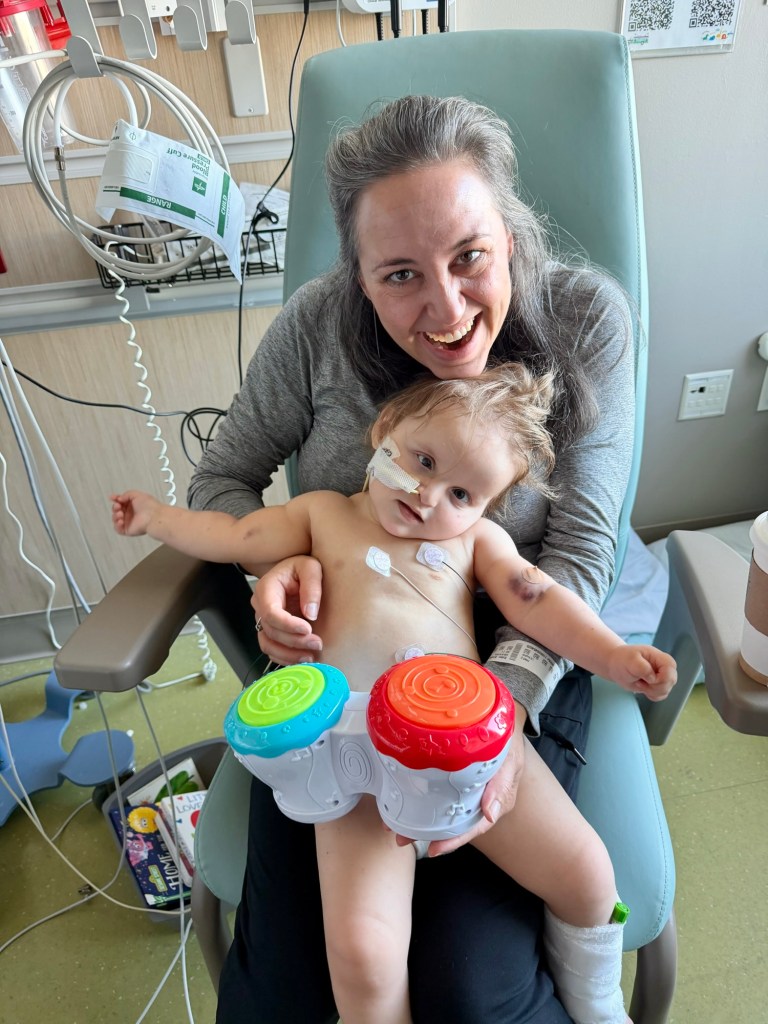
Getting Back to the Things We Love
One of our biggest goals right now is figuring out how to incorporate Brinley’s new care needs into our everyday activities.
Before these hospitalizations, we loved getting out of the house, taking walks, visiting parks, spending time with friends and family, and bringing Brinley along on our adventures. We have no intention of letting her new medical routines change that!
We’re learning how to pack her feeding supplies, coordinate medications around appointments and outings, and manage her feeding schedule while we’re away from home. Something as simple as an afternoon at the park now requires a little extra preparation, but we’re getting better at it each day.
Our goal is to make her medical care part of our lives rather than allowing it to define our lives.
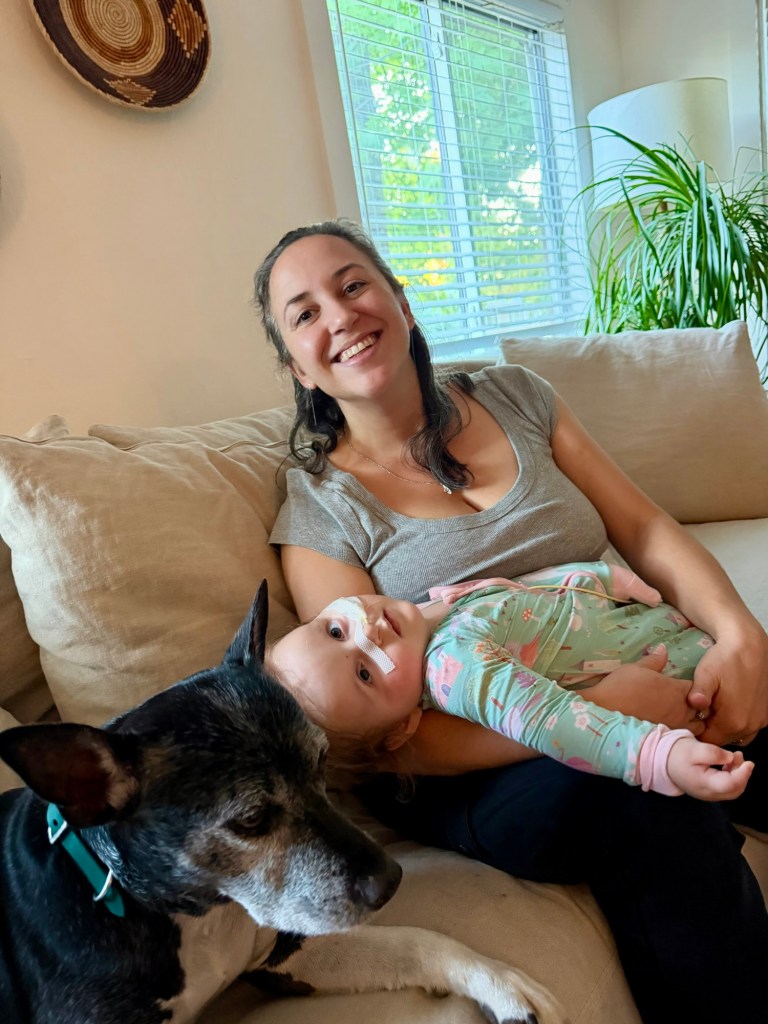
Looking Forward
These past few weeks have certainly tested us, but they’ve also given us a clearer picture of how to best support Brinley moving forward.
We now have a better understanding of her dystonia, a medication plan that is helping manage her symptoms, and a growing support team to help us navigate her daily care.
We’re excited to get back into our routines, return to work, reconnect with friends, and hopefully enjoy a little more normalcy after what has been a very eventful month.
Most importantly, we’re excited to see Brinley continue to grow, develop, and enjoy life. She’s an incredibly resilient little girl, and despite everything she’s been through, she continues to bring so much happiness into our lives.
We also want to thank everyone who has supported our family over the past several weeks. From door dash gift cards, donations, and thoughtful messages to helping us coordinate additional care, the generosity and kindness we’ve experienced have been remarkable.
We’re grateful to have such an incredible community surrounding Brinley, and we look forward to sharing more of her progress and adventures in the weeks ahead.
With love,
Lauren, Keith & Brinley ❤️